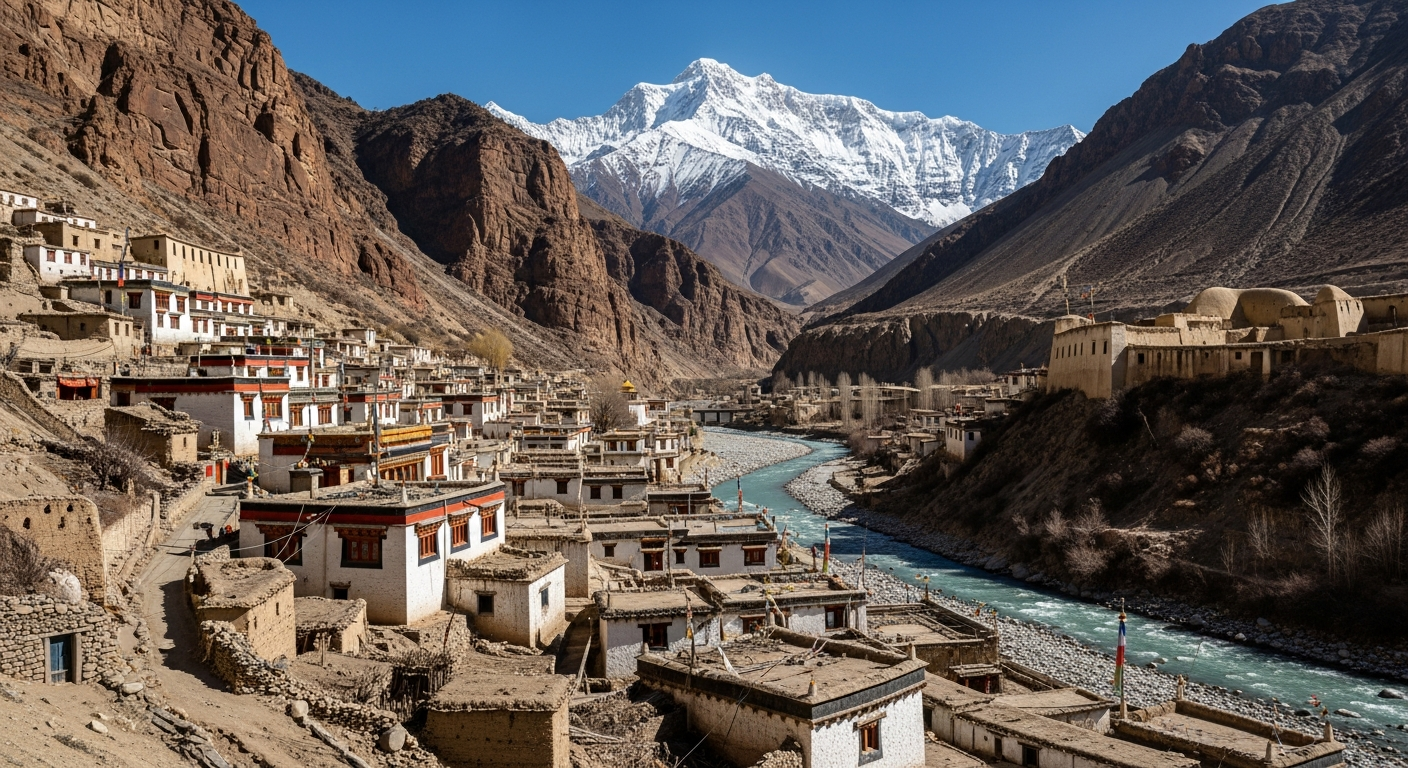
Nepal holds a unique place in the spiritual heart of every Hindu. This small Himalayan kingdom, nestled between India and Tibet, is home to some of the holiest sites in the entire subcontinent — places where the divine and the mortal meet in clouds of incense, the ringing of temple bells, and the thunderous roar of ancient rivers. For Indian pilgrims, Nepal is not a foreign land — it is a sacred extension of the motherland, a place where the epics of Ramayana and Mahabharata came alive, where Lord Shiva and Lord Vishnu are worshipped in forms found nowhere else on Earth.
From Gorakhpur in Uttar Pradesh — just 90 kilometres from the Nepal border — millions of Indian devotees make the journey northward every year. They come to bow before the eternal flame of Lord Shiva at Pashupatinath in Kathmandu, to seek liberation at the 108 sacred water spouts of Muktinath in the high Mustang Himalayas, to touch the holy soil of Janakpur where Goddess Sita was born, and to marvel at the breathtaking lakeside city of Pokhara — the gateway to the Annapurna mountains.
This complete guide is written specifically for Indian pilgrims planning a Nepal yatra (pilgrimage journey). We cover everything you need to know: travel documents, border crossing, routes, what to see and do at each sacred site, the best time to visit, practical tips, and a ready-made 10-day itinerary you can follow from Gorakhpur. Whether this is your first trip or your tenth, read on — Nepal is waiting with open temples and open arms.
Travel Documents for Indian Citizens — No Visa Required
One of the greatest blessings for Indian pilgrims is that Indian citizens do not require a visa to enter Nepal. This is a unique privilege that makes Nepal one of the few international destinations where Indians can travel freely without any pre-approval from an embassy.
However, you must carry a valid proof of identity. The following documents are accepted at all Nepal entry points:
- Aadhaar Card — The most widely accepted and convenient document. Keep the original; photocopies are not accepted at immigration.
- Indian Passport — Valid passport, accepted at all border crossings and airports.
- Voter ID Card — Accepted at land border crossings.
- Driving Licence with photograph — Accepted at some borders, but Aadhaar or Passport is strongly recommended.
Children below 10 years do not need a separate document if travelling with parents. Children aged 10 and above need their own ID. A school identity card with photograph is accepted for children. Birth certificate (original) is required for infants.
At the border, you will complete a simple immigration form at the Nepal Immigration Office (both at Sunauli/Sonauli and other border crossings). The process takes 10–20 minutes and there are no fees for Indian citizens. Keep your entry receipt safely — you will need it when you exit Nepal.
Currency
Indian Rupees (INR) are widely accepted across Nepal, especially in tourist areas, hotels, and shops. The exchange rate is approximately 1 INR = 1.60 Nepali Rupees (NPR). While you can use INR for most transactions, it's advisable to carry some NPR for small purchases, local transport, and temple donation boxes where exact change is needed. Currency can be exchanged at the border or at banks and authorised money changers in Kathmandu and Pokhara.
How to Reach Nepal from India (via Gorakhpur)
Gorakhpur, Uttar Pradesh is the most convenient base city for Indian pilgrims travelling to Nepal, sitting just 95 kilometres from the Sunauli (Sonauli) border crossing — the busiest India-Nepal land border for travellers from UP, Bihar, and adjoining states.
By Road (Most Popular Route)
From Gorakhpur Railway Station or bus terminal, take a direct bus or shared taxi to Sunauli (also called Sonauli on the Indian side, Belahiya on the Nepal side). The journey takes approximately 2.5 to 3 hours. Buses depart every 30–60 minutes from Gorakhpur bus stand. Fare: ₹80–150 per person.
At Sunauli, cross the India-Nepal Friendship Bridge on foot. Complete your immigration formalities on the Nepal side, then board a local bus, jeep, or taxi to Bhairahawa (also called Siddharthanagar), the nearest Nepali town, just 4 km from the border. From Bhairahawa, your Nepal journey begins in earnest.
By Train
Gorakhpur is one of India's busiest railway junctions. Several trains connect Gorakhpur to major cities — pilgrims can alight at Gorakhpur Junction and then proceed by road to Sunauli. There is no direct train to the Nepal border, but the road journey from Gorakhpur is short and comfortable.
By Air
For pilgrims short on time, Gorakhpur Airport has flights to Kathmandu (Tribhuvan International Airport). Alternatively, fly from Lucknow, Varanasi, or Delhi to Kathmandu — a ~1.5-hour flight. Once in Kathmandu, you're already at the door of Pashupatinath Temple and can plan the rest of the circuit by road or domestic flight.
Muktinath Temple — Salvation at 3,710 Metres
High in the Mustang district of Nepal, at an altitude of 3,710 metres above sea level, sits one of the holiest temples in the Hindu world — Muktinath Temple. Dedicated to Lord Vishnu (also revered by Buddhists as Chumig Gyatsa, meaning "Hundred Waters"), Muktinath is one of the 108 Divya Desams — the most sacred Vishnu temples as per the Vaishnava tradition. Its name means "Lord of Salvation" (Mukti = liberation, Nath = Lord), and devout Hindus believe that taking a dip in its 108 water spouts and worshipping here grants moksha — liberation from the cycle of birth and death.
Spiritual Significance
The Muktinath complex contains three extraordinary natural phenomena that make it unique among all temples in the world. First, the 108 water spouts (Muktidhara) — carved in the shape of cow heads — pour sacred water that pilgrims bathe under, despite the biting cold. Second, the Jwala Mai shrine — a small temple where natural gas seeps through the earth, creating an eternal flame that burns simultaneously alongside flowing water and earth, representing the sacred unity of the five elements. Third, the black Shaligram stones — ammonite fossils found in the nearby Kali Gandaki riverbed — are considered to be the most sacred manifestations of Lord Vishnu on Earth and are taken home by pilgrims as prasad.
How to Reach Muktinath
The most practical route for pilgrims is: Pokhara → Jomsom → Muktinath.
- Pokhara to Jomsom by flight: A thrilling 20-minute mountain flight operated by Tara Air and Summit Air. Flights depart early morning (weather conditions permitting). Fare: approximately NPR 8,000–10,000 (₹5,000–6,250). Book in advance as seats are limited.
- Jomsom to Muktinath by jeep: From Jomsom airport, hire a local jeep (approximately NPR 2,500–4,000 per jeep, shared among 4–6 passengers). The journey winds through the spectacular Kali Gandaki gorge — the deepest gorge in the world — past Kagbeni village, taking about 1.5 to 2 hours.
- Alternative — Road from Pokhara: A scenic but long journey by jeep via the Mustang Highway (8–10 hours, subject to road conditions).
Darshan & Temple Timings
The main temple is managed by Dharmarth Trust and is open from 6:00 AM to 8:00 PM. Entry is free for all devotees. The 108 water spouts are open at all times. It is advisable to arrive early morning for the least crowd and the best weather. The altitude means temperatures can drop sharply after noon — bring warm layers even in summer.
Muktinath sits at 3,710m. If you are coming from sea level, acclimatise for at least one night in Jomsom (2,720m) before going up. Carry water, avoid heavy meals, and do not rush. Symptoms of altitude sickness (headache, nausea, dizziness) should be taken seriously — descend immediately if they worsen.
Pashupatinath Temple — Lord Shiva's Most Sacred Home
On the banks of the sacred Bagmati River in Kathmandu lies Pashupatinath Temple — arguably the most important Hindu temple outside India and one of the greatest Shiva shrines on Earth. A UNESCO World Heritage Site since 1979, Pashupatinath is the presiding deity of Nepal and the spiritual guardian of the Himalayan kingdom. Pashupati literally means "Lord of All Living Beings" (Pashu = animal/living being, Pati = Lord) — a form of Lord Shiva in his benevolent, protective aspect.
Spiritual Significance
The temple houses one of the twelve Jyotirlingas according to some traditions and is certainly counted among the most sacred Shiva temples in Asia. The main sanctum contains a magnificent four-faced silver lingam — each face representing a different aspect of Shiva: Sadyojata (creation), Vamadeva (preservation), Aghora (dissolution), and Tatpurusha (grace). Indian pilgrims who have visited all twelve Jyotirlingas often add Pashupatinath to complete their Shiva pilgrimage journey.
The Bagmati River that flows beside the temple is considered as sacred as the Ganges. The cremation ghats (Aryaghat) along its banks are among the most ancient and spiritually significant in South Asia. Witnessing the cremation ceremonies from the opposite bank — where visitors and tourists may stand — is a profound and humbling experience that reminds every pilgrim of the impermanence of life and the eternal nature of the soul.
How to Reach Pashupatinath
The temple is located approximately 5 km from Thamel, Kathmandu's tourist hub. From Sunauli border: board a direct tourist bus or local bus to Kathmandu (journey: 6–7 hours). From Kathmandu bus park, take a taxi to Pashupatinath (approximately NPR 300–400). The temple is well-signed and easily accessible by taxi, auto-rickshaw, or local bus (Route 14 from Ratna Park).
Entry Rules
Indian Hindus are allowed inside the main temple complex including the central sanctum — a privilege not extended to non-Hindu foreign nationals (who may worship from designated viewing areas on the opposite bank). Carry your Aadhaar card to demonstrate you are an Indian Hindu if asked. Entry to the main temple area is free; some inner shrines may have a nominal entry fee.
Best Time to Visit
Pashupatinath is at its most spectacular during Maha Shivaratri (February/March), when hundreds of thousands of pilgrims from India and Nepal converge on the temple, and thousands of sadhus (holy men) set up camp in the temple grounds. It is also spectacular during Teej (August/September), when thousands of women in red saris worship Lord Shiva for marital happiness.
Pokhara — The Jewel of the Himalayas
At the foot of the Annapurna mountain range, reflected in the mirror-like surface of Phewa Lake, lies Pokhara — Nepal's second-largest city and arguably its most beautiful. While Pokhara is internationally renowned as a trekking and adventure hub, it holds deep spiritual significance for Hindu pilgrims too, and serves as the essential gateway to Muktinath in the Mustang valley.
Sacred Sites in Pokhara
Tal Barahi Temple — Set on a small island in the centre of Phewa Lake, this two-storied pagoda temple is dedicated to Barahi Bhagwati (the Boar Goddess, a manifestation of Durga). Pilgrims reach it by wooden rowboat and offer prayers amid the sounds of the lake and the distant mountains. The sight of the temple at dawn, with the Annapurna massif glowing pink behind it, is one of the most unforgettable in all of Nepal.
Bindhyabasini Temple — Perched on a hilltop above Pokhara's old bazaar, this ancient temple is dedicated to Goddess Bindhyabasini — a form of Bhagwati (Durga). It is the oldest and most important temple in Pokhara, with a commanding view of the city and mountains. Animal sacrifices are offered during Dashain (October). The temple sees thousands of pilgrims every week.
Gupteshwor Mahadev Cave — A sacred cave temple dedicated to Lord Shiva, located near the Davis Falls on the southern edge of Pokhara. Shiva lingams are enshrined deep within the cave system, and the underground streams create an otherworldly atmosphere. Entry fee applies.
How to Reach Pokhara
From Kathmandu: tourist bus (7–8 hours, departs Thamel daily), or a 25-minute domestic flight (NPR 7,000–12,000). From Bhairahawa (Sunauli border): direct bus to Pokhara (~4 hours). Pokhara serves as the hub from which pilgrims fly to Jomsom and onward to Muktinath.
Janakpur — Birthplace of Goddess Sita, Bride of Lord Rama
In the flat Terai plains of Nepal's Madhesh Province, south of Kathmandu and close to the Indian border with Bihar, lies the ancient city of Janakpur — one of the most sacred places in the entire Ramayana tradition. This is the legendary Janakpuri, kingdom of Raja Janak, where Goddess Sita was born from the earth during a sacred ploughing ceremony. It is here that the young Prince Rama of Ayodhya came and proved his divinity by lifting and stringing the bow of Lord Shiva (Haradhanusha), winning the hand of Sita in the svayamvar.
Janaki Mandir — Temple of the Divine Mother
The centrepiece of Janakpur is the magnificent Janaki Mandir (also called the Naulakha Mandir) — a stunning white marble palace-style temple built in 1911 by Queen Vrisha Bhanu of Tikamgarh, Madhya Pradesh. The temple covers 4,860 square feet of ornate architecture combining Mughal and Rajput styles, with 60 rooms, 72 spires, and intricate lattice windows. Inside the main sanctum stands the idol of Sita (Janaki), flanked by Ram, Lakshman, and Hanuman.
For devotees from UP and Bihar — where the Ramayana tradition is most deeply embedded in daily life — Janakpur is an intensely emotional destination. The city feels like Ayodhya's sister: the same devotional music, the same scent of flowers and incense, the same sense of stepping into a living epic.
Sacred Ponds of Janakpur
Janakpur is dotted with sacred kunds (ponds) mentioned in the Ramayana scriptures. The most important are:
- Dhanush Sagar — The largest sacred pond, where pilgrims take a ritual bath before entering Janaki Mandir.
- Ganga Sagar — Named after the Ganges, believed to have spiritual merit equivalent to bathing in the Ganga.
- Ram Sagar — Where Lord Rama is said to have bathed during his time in Janakpur.
- Vivah Mandap — The sacred pavilion (mandap) where the wedding of Ram and Sita was performed.
Vivah Panchami — The Grand Festival
The most spectacular time to visit Janakpur is during Vivah Panchami, usually falling in November or December (5th day of the Margashirsha month). This festival re-enacts the wedding of Ram and Sita in elaborate procession and ritual. Ram's wedding procession (baarat) travels symbolically from Ayodhya (a nearby locality) to Janakpur, with thousands of devotees dressed as wedding party members. It is a sight of extraordinary colour, devotion, and joy — arguably the most unique religious festival in the Nepal-India region.
How to Reach Janakpur
From Gorakhpur: Cross the Sunauli border → Bhairahawa → road to Birganj (or cross at Raxaul-Birganj border if coming from Bihar) → Janakpur (~180 km from Birganj, 4–5 hours by road through the Terai plains). Buddha Air and Yeti Airlines operate domestic flights from Kathmandu to Janakpur (20 minutes). Janakpur also has a railway line connecting it to Jayanagar in Bihar — though service is limited, it is a unique historic route.
Suggested 10-Day Pilgrimage Itinerary from Gorakhpur
| Day | Route | Highlights |
|---|---|---|
| Day 1 | Gorakhpur → Sunauli border → Bhairahawa | Border crossing, overnight stay in Bhairahawa. Visit nearby Lumbini (birthplace of Lord Buddha, 22 km) if time permits. |
| Day 2 | Bhairahawa → Pokhara (by bus, ~4 hrs) | Check in, evening stroll to Lakeside, Fewa Lake views, Pokhara bazaar. |
| Day 3 | Pokhara sightseeing | Morning: Tal Barahi Temple boat ride, Bindhyabasini Temple. Afternoon: Peace Pagoda (Shanti Stupa), Gupteshwor Cave. Sunset at Sarangkot viewpoint (Annapurna views). |
| Day 4 | Pokhara → Jomsom (flight, 20 min) → Muktinath | Early morning flight to Jomsom. Jeep to Muktinath (1.5 hrs). Afternoon darshan at Muktinath Temple. Bath under 108 water spouts. Visit Jwala Mai shrine. |
| Day 5 | Muktinath → Jomsom → Pokhara (flight) | Morning: Final prayers at Muktinath at sunrise. Descent by jeep to Jomsom. Flight back to Pokhara. Collect Shaligram stones from the Kali Gandaki riverbed in Jomsom. |
| Day 6 | Pokhara → Kathmandu (by road ~7 hrs or flight 25 min) | Scenic Prithvi Highway journey through hills and rivers. Check in Kathmandu (Thamel area). |
| Day 7 | Kathmandu — Pashupatinath & surroundings | Early morning: Pashupatinath Temple darshan at Aarti time (5:00 AM). Afternoon: Boudhanath Stupa, Swayambhunath (Monkey Temple). Evening: Kathmandu Durbar Square. |
| Day 8 | Kathmandu → Janakpur (flight 20 min or road ~6 hrs) | Fly or drive to Janakpur. Check in. Evening visit to Janaki Mandir for aarti. |
| Day 9 | Janakpur full day | Morning: Sacred bath at Dhanush Sagar or Ganga Sagar. Janaki Mandir darshan. Visit Ram Mandir, Vivah Mandap, Ram Sagar, Ratna Sagar Lake. Local market — buy religious items, sweets. |
| Day 10 | Janakpur → Raxaul border → Gorakhpur (return) | Morning departure. Cross into India at Raxaul (Bihar) or return via Birganj → Sunauli. Evening arrival in Gorakhpur. |
Best Time to Visit Nepal for Indian Pilgrims
October – November (Best Overall)
The finest time to visit Nepal. The post-monsoon skies are crystal clear, mountain views are spectacular, and temperatures are ideal — warm during the day and cool at night. Roads and mountain flights operate normally. This is also the season of Dashain and Tihar (Nepal's two biggest festivals), which transform Kathmandu and Pokhara into celebrations of colour and light. Muktinath roads are fully accessible.
February – March (Shivaratri Season)
If Pashupatinath is your primary destination, plan your visit around Maha Shivaratri (February/March). The temple sees its greatest gathering of the year, with millions of pilgrims, hundreds of thousands of sadhus from across India and Nepal, and a night-long puja and vigil. Book accommodation in Kathmandu 2–3 months in advance during Shivaratri.
November – December (Vivah Panchami at Janakpur)
The Vivah Panchami festival in Janakpur (usually falling in late November or early December) draws thousands of Ram-Sita devotees from across India and Nepal. This is the best time to experience Janakpur at its most devotionally charged.
April – May (Spring)
Spring brings rhododendron blossoms to the mountains and is an excellent time for Muktinath. Temperatures are pleasant and mountain views are clear. Avoid late May as pre-monsoon heat can make the Terai (Janakpur region) uncomfortable.
Avoid: June – August (Monsoon)
Heavy rainfall causes landslides, road closures, and flight cancellations in the mountain regions. Muktinath access can be severely disrupted. While Kathmandu and Janakpur remain accessible, travel is less comfortable. Strict pilgrims who must travel in monsoon should focus on Pashupatinath and Janakpur only.
Essential Tips for Indian Pilgrims Visiting Nepal
Carry Original ID
Always carry your original Aadhaar card or passport. Photocopies are not accepted at Nepal immigration. Keep it accessible, not buried in checked luggage.
Currency Tips
INR is accepted widely but carry some NPR for local transport and small shops. Exchange at official counters. 2,000 INR notes may not be accepted everywhere in Nepal.
Book Jomsom Flight Early
The Pokhara-Jomsom flight has very limited seats (9-19 seat aircraft). Book at least 4–6 weeks in advance, especially in peak season. Only morning flights operate (afternoon winds make landing unsafe).
Temple Dress Code
Dress modestly at all temples. Remove footwear before entering. At Pashupatinath, leather items (belts, bags) should be left outside. At Muktinath, warm layers are essential — temple forecourt is open-air at high altitude.
Altitude at Muktinath
At 3,710m, altitude sickness is a real risk. Stay hydrated, avoid alcohol, acclimatise in Jomsom first. Diamox tablets (consult your doctor) can help. Descend immediately if symptoms worsen.
SIM Card & Maps
Buy a Nepal Telecom or Ncell SIM at the border or in Kathmandu. Download offline maps (Maps.me or Google Maps offline) for mountain areas where connectivity is weak. WhatsApp works with data.
Health & Safety
Drink only bottled or filtered water. Carry a basic medical kit with altitude sickness medication, ORS sachets, pain relief, and a first-aid kit. Bhawani Travels packages include 24/7 support during your trip.
Travel with a Trusted Agency
Booking with a local agency like Bhawani Travels — based in Gorakhpur — means someone who knows the roads, hotels, and temples handles every detail. You focus on prayer; we handle logistics.
Conclusion — Your Nepal Yatra Awaits
Nepal is not just a travel destination — for a Hindu pilgrim, it is a homecoming. The ancient temples that dot its landscape from the Terai plains to the Himalayan passes have been drawing Indian devotees for thousands of years, long before there were buses or aeroplanes or border checkpoints. The gods who reside here are the same gods who live in every Indian home — Shiva, Vishnu, Sita, Durga — and visiting their most magnificent abodes in the shadow of the world's highest mountains is an experience that transforms the soul.
From Gorakhpur, you are closer to this sacred world than you might think. In just a 2-hour road journey, you can cross into Nepal and begin a journey that takes you from the lush Terai birthplace of Goddess Sita, through the sparkling lakeside temples of Pokhara, past the eternal flame of Pashupatinath, and up into the thin, cold air of Muktinath — where 108 streams of holy water pour down from the Himalayan heights and wash away the burdens of a lifetime.
Plan your yatra well, go with an open heart, and carry nothing but faith. Nepal will do the rest.
Let Bhawani Travels Plan Your Nepal Yatra
We are based in Gorakhpur, just 90 km from the Nepal border. Our Nepal pilgrimage packages cover Muktinath, Pashupatinath, Pokhara, Janakpur and more — with all transport, hotels, meals, and guides arranged. Call us or send a WhatsApp message to get a free, personalised itinerary.
💬 WhatsApp Us for a Free Quote